



UV400 Window Film Technology

UV400 WINDOW FILM TECHNOLOGY · SINCE 1989
Discover how UV400 window film technology works, understand the difference between UV380 and UV400, and learn how to choose UV protection window tint for automotive glass.
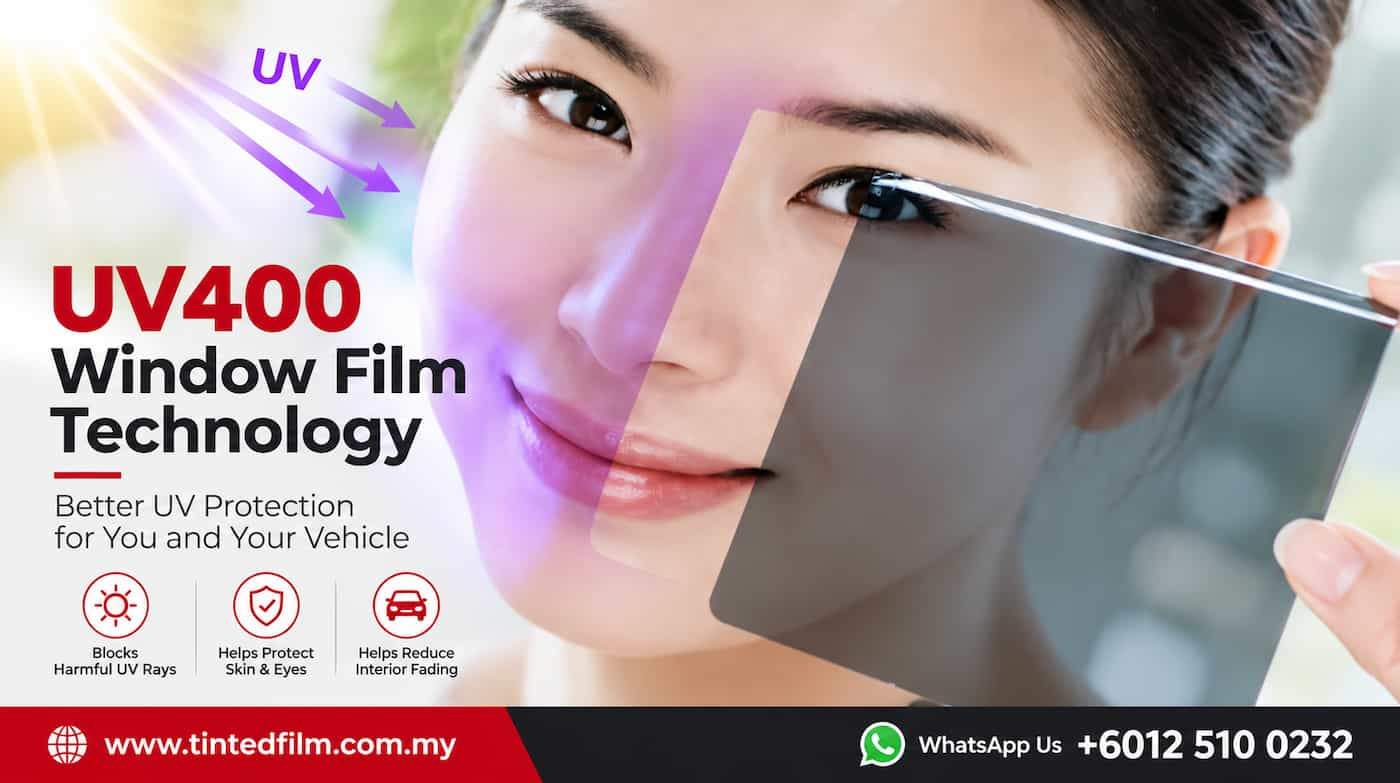
Automotive window tint is commonly selected for heat rejection, glare reduction and privacy. However, ultraviolet protection is another important consideration when comparing window film technologies.
UV400 window film generally refers to film designed to reduce ultraviolet transmission across wavelengths extending towards 400 nanometres. Understanding this technology helps drivers, tint installers and wholesale buyers evaluate UV protection more accurately.
What Is UV400 Window Film Technology?
UV400 is a term associated with ultraviolet protection extending towards approximately 400 nm, near the boundary between ultraviolet and visible light.
Window films may use UV-absorbing materials, specialised coatings and multilayer constructions to reduce ultraviolet transmission through glass.
The effectiveness of UV protection depends on the film's tested performance. A UV400 label alone does not automatically confirm 100% rejection of every ultraviolet wavelength.

Understanding UVA, UVB and UVC Radiation
Ultraviolet radiation is part of the electromagnetic spectrum. Solar ultraviolet radiation is commonly divided into three wavelength categories.

UV380 vs UV400 Window Film: What Is the Difference?
The main difference between UV380 and UV400 concerns the wavelength range referenced by the UV protection claim.
UV380 generally refers to protection extending towards 380 nm, while UV400 refers to protection extending towards 400 nm. Actual ultraviolet rejection must still be confirmed through testing.
| Feature | UV380 | UV400 |
|---|---|---|
| Referenced wavelength | Up to about 380 nm | Up to about 400 nm |
| Upper UVA range | Check measured coverage | Extends towards 400 nm |
| Actual UV rejection | Depends on film testing | Depends on film testing |
| Heat rejection | Separate specification | Separate specification |
Both UV380 and UV400 products can provide meaningful ultraviolet reduction. Choosing a suitable film requires comparing measured UV protection rather than relying on terminology alone.
Does UV400 Window Film Also Reduce Solar Heat?
UV protection and solar heat rejection are different measurements. Some window films offer high UV rejection but relatively modest heat reduction.
When comparing automotive window tint, it is important to understand the following specifications.
UVR — Ultraviolet Rejection
Indicates how effectively a film reduces ultraviolet transmission across its stated test range.
IRR — Infrared Rejection
Describes infrared radiation reduction at specified wavelengths or measurement conditions.
TSER — Total Solar Energy Rejected
Provides a broader measure of solar energy rejection.
VLT — Visible Light Transmission
Describes the percentage of visible light passing through the film or tested glass assembly.
For drivers concerned about cabin heat, TSER, IRR and VLT should be considered alongside UV protection. A high UVR figure alone does not guarantee high overall solar heat rejection.
Benefits of UV Protection Window Film
A properly selected UV protection window film can provide several practical benefits.
- Reduced UV transmission: Helps lower ultraviolet exposure through treated glass.
- Interior protection: May help reduce UV-related fading of vehicle seats, dashboards and other interior materials.
- Different transparency options: UV protection is available across different VLT levels, depending on the selected film.
- Additional solar control: Selected products may also offer heat and glare reduction.
How to Choose UV400 Car Window Tint
When purchasing UV protection window tint, review the individual product specifications carefully. Not all films offer identical ultraviolet protection, optical clarity or solar heat rejection.
Compare the tested UV rejection range, VLT, IRR, TSER, glass compatibility and applicable vehicle tint regulations. Professional installers should also consider installation suitability and supplier technical support.
Explore UV400 Window Film and Automotive Tint
Sun-Shine Marketing (M) Sdn Bhd has supplied window films since 1989, serving professional tint installers, automotive workshops and wholesale customers.
Explore our automotive film collections to compare UV protection, ceramic technology, infrared rejection and different visible light transmission options.
Frequently Asked Questions About UV400 Window Film
What does UV400 mean in window film?
UV400 refers to ultraviolet protection intended to extend towards 400 nm. Actual protection depends on the film's measured ultraviolet rejection performance.
Is UV400 better than UV380?
UV400 references a wider wavelength range, but the better film depends on verified protection levels, optical performance and suitability for the intended application.
Does darker window tint block more UV?
Not necessarily. Film darkness and ultraviolet rejection are different characteristics. Some relatively clear films can provide substantial UV protection.
Does UV400 guarantee 100% UV protection?
No. UV400 terminology alone does not prove complete ultraviolet blockage. Always refer to individual product test results and wavelength coverage.
Can UV400 window film reduce heat inside a car?
Some UV protection films also reduce solar heat, but heat rejection performance should be evaluated using TSER, IRR and related product specifications.
 Rainbow Films
 Bundle Sales